
KeraNatural™
KeraNatural sterile allograft rings and arcs were developed by VisionGift, in their state of the art laboratories. VisionGift is an FDA registered and Eye Bank Association of America accredited eye bank. With facilities located on both coasts of the United States, in Portland, OR and Boston, MA. , KeraNatural is processed in VG’s ISO certified clean rooms to ensure safe and consistent grafts. They are packaged using VGs patented sterilization process, to ensure ease of use and they come with a two year shelf life, so you don’t have to worry about timelines and lack of availability associated with fresh corneal tissue. When it comes to kerataconus, KeraNatural is the clear choice for corneal contouring

Primarily symptoms first appear during puberty or the late teens, and in addition to blurred vision, keratoconus can cause sensitivity, redness and swelling, contact lenses to fit improperly, corneal bulging, and swelling or scarring of the cornea. Keratoconus usually affects both eyes, and the associated symptoms make daily tasks such as reading and driving extremely difficult. Currently, advanced cases frequently require a cornea transplant as the only treatment option. KeraNatural offers an alternative to full penetrating corneal transplants, and a natural option to other available treatments – including Kerarings.
KERARING segments work by remodelling the cornea through the addition technique, while preserving the corneal integrity. KERARING segments come in two types: Standard rings with constant thickness and KERARING AS with progressive thickness. Both types come in a 5mm and 6mm diameter. Haag-Streit UK is an Authorised UK Distributor of the Mediphacos KERARING range.
Keranatural will also replace INTACS – Intacs are a pair of tiny, crescent-shaped, clear plastic implants that are placed into the cornea (clear layer of tissue over the front of the eye) to provide long-term vision correction. Intacs is a brand of intrastromal corneal ring segments (ICRS), a medical device used to treat eye diseases such as keratoconus.
What Makes KeraNatural the Best Choice?
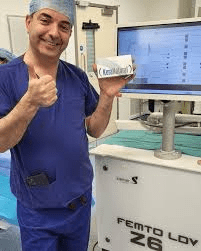
Mr Samer Hamada is a highly trained and experienced corneal surgeon with 18 years’ experience in ophthalmology both in the UK and internationally. He has completed cornea and anterior segment fellowships at the Birmingham and Midland Eye Centre, Wolverhampton Eye Infirmary, and QVH’s Corneoplastic Unit and Eye Bank. He also completed a fellowship in paediatric ophthalmology at Great Ormond Street Hospital for Children in London.
Mr Hamada devotes a lot of time to developing new innovations for managing patients with cornea and ocular surface diseases. He is the first in the UK to offer KeraNatural, saying “I am so honoured to the first KeraNatural user in the UK- helping KC patients to see better”
NO MORE PLASTIC RINGS! Allograft inlays a natural way to reshape the cornea
“My personal strategy for visual rehabilitation in patients with keratoconus is a wonderful sterile allograft inlay, the KeraNatural, developed by the Lions VisionGift eye bank in the U.S.” states Aylin Kiliç, MD, an associate professor with Medipol University Hospital, Istanbul, Turkey.
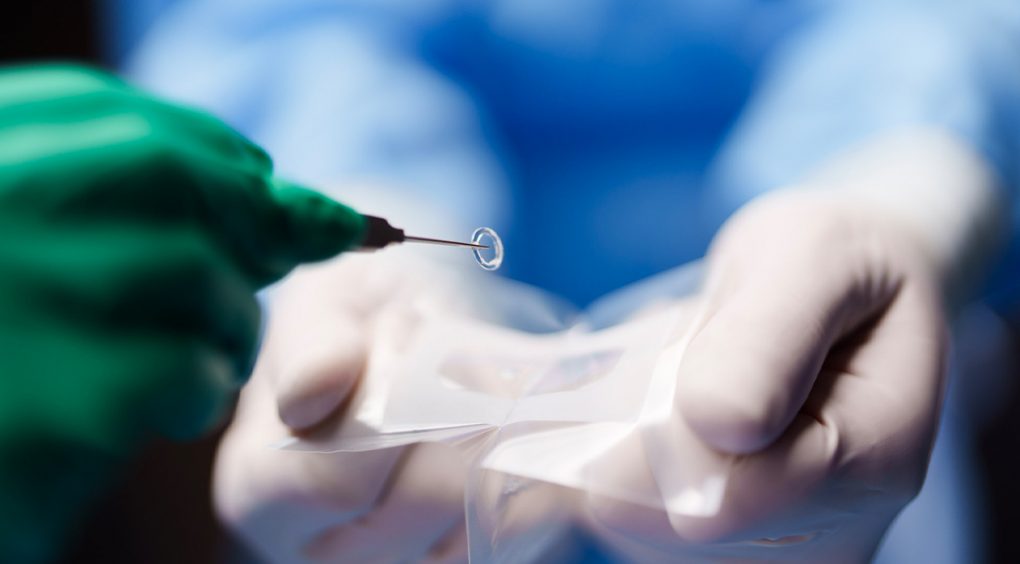
I like to call the procedure “collagen injection.” Much as we use collagen to refill and correct imperfections in our skin, we can use it to reshape irregular corneas. It is an equally easy and fast procedure that takes only 5 or 6 minutes. We create channels in the cornea with the femtosecond laser and inject the collagen rings into them. And like aesthetic surgeons who call you after a few weeks to check whether the procedure needs fine-tuning, we call our patients to check and perform some custom adjustments. We can easily split, reduce, shorten, add or remove collagen tissue to tailor the effect and enhance our results.
We have now 2 years of follow-up in 120 eyes. No patient had vision loss, and 30% had an increase in vision of six lines or more. Usually, to further stabilize the cornea and halt disease progression, I perform cross-linking after 6 months. However, several patients have come to me for vision improvement with a previously cross-linked cornea, and I performed the collagen injection on them. It works both ways, before or after CXL.
These rings were originally designed for presbyopia. I tried them, they worked well, and I thought: Why not use them for keratoconus? I suggested some shape changes, which the company made, and so we have now this wonderful option.
Patients with keratoconus are young and until recently had only keratoplasty as an option, a long, invasive surgery under general anesthesia with uncertain outcomes and a high rate of failure in the long term. My mission is to make keratoplasty a thing of the past for patients with keratoconus because keratoplasty is no longer necessary for them. We have now a procedure that is minimally invasive, quick to perform under topical anesthesia, adjustable and reversible, and it does not preclude corneal transplantation in the few cases in which it might be needed at a later stage.

Leave a comment